In Waves and War: What Netflix Missed About Ibogaine Therapy for Veterans with PTSD and mTBI
When the film “In Waves and War” dropped on Netflix, a lot of people in our world, from trauma clinicians, ibogaine providers, veterans, and families, hit play with a lump in their throat, wondering what this “In Waves and War” ibogaine documentary would mean for the wider field.
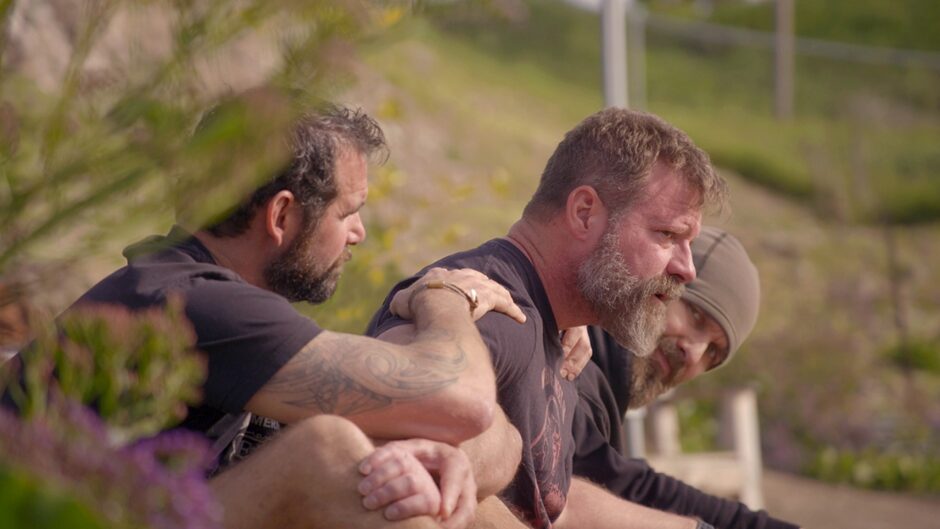
The film follows former U.S. Navy SEALs living with severe PTSD, depression and mild traumatic brain injury (mTBI) as they travel to a clinic in Mexico for ibogaine therapy for PTSD and mTBI, with researchers from Stanford following their progress.
It’s raw, moving, and at moments very hard to watch. It also does something incredibly important:
- It names the invisible injuries of war.
- It normalises seeking help outside the usual system.
- And it puts ibogaine – long whispered about in special-operations circles – right into the mainstream conversation.
At the centre of the film is Ambio Life Sciences, the clinic where many of these SEALs receive treatment. Ambio has contributed to serious research with Stanford, including work published in Nature Medicine showing significant improvements in mood and functioning among veterans with TBI after ibogaine treatment for veterans in Mexico.
The courage of those men, and the work of teams like Ambio, has helped move this whole field forward.
But a documentary – especially one with the emotional power of In Waves and War – can also leave people with big, unanswered questions:
At the centre of the film is Ambio Life Sciences, the clinic where many of these SEALs receive treatment. Ambio has contributed to serious research with Stanford, including work published in Nature Medicine showing significant improvements in mood and functioning among veterans with TBI after ibogaine treatment for veterans in Mexico.
We’re not here to tear any of that down. The courage of those men, and the work of teams like Ambio, has helped move this whole field forward.
But a documentary – especially one with the emotional power of In Waves and War – can also leave people with big, unanswered questions:
- Is ibogaine really a “magic bullet”?
- Is Mexico the only place to go?
- What about safety – both medical and physical?
- Are there alternatives if I’m living with PTSD or mTBI and don’t want to travel into a perceived conflict zone?
That’s where we’d like to gently widen the lens and share how Tabula Rasa Retreat in Portugal fits into this evolving picture.
PTSD and mTBI: The War That Follows You Home

One of the most important things the film gets right is showing that these men aren’t just “shell shocked” – they’re living with overlapping injuries:
- PTSD: intrusive memories, nightmares, hypervigilance, emotional numbing.
- mTBI: headaches, cognitive fog, balance issues, sleep problems, mood swings.
In veterans, PTSD and mTBI in veterans almost never arrive alone. Research from the U.S. Department of Veterans Affairs and organisations like Wounded Warrior Project shows that:
- Mild TBI and PTSD symptoms overlap so much that they are often misdiagnosed or missed.
- Head injuries increase the risk of later PTSD and depression.
That’s why a simple “talk therapy only” model often isn’t enough. You’re dealing with:
- Neurological injury
- Psychological trauma
- Moral injury
- Sleep and autonomic dysregulation
- Often, substance use layered on top
As one of the veteran’s wives pointed out in the film:
“Marcus went through the VA. They did sleep studies, painted imaging, they did psychological measures. None of those things were working. He was on, you know, 10 medications. Something for energy, something for nightmares, something for depression, something for anxiety. He was taking the medications, he was doing talk therapy, all the things that he was being told to do, and he was actually getting worse.”
Later in the film, weeks after his ibogaine treatment, Marcus related a profound change:
“[During the ibogaine journey] I saw all these images shuffling, almost like cards, just thousands of pictures…that fast. I saw images of my childhood, and I would see images of my dad. I don’t know, maybe something happened around that, maybe it was an incident, you know.
And then I saw images of [my deceased colleagues]. I was able to see these difficult moments from my life from a different angle, and it made me realize that none of this was my fault.
The weight was getting lifted off. I felt almost like a defragging of my brain. All the walls you put up, all the body armour you put on—that all goes away. The ego goes away, and you’rejust a pure version of an individual that just loves everything. Lifted, felt light, you know, felt
like it was like a new day.
After my ibogaine experience, when I saw Amber, the first thing I said to her was that all her friends that we hear about who are suffering—we need to introduce this to them and get them better.”
Regarding the symptoms of his mTBI, veteran Elias K said:
“All the tension in my body’s gone! My headache that I’ve had for 12 years is gone, and I felt my brain was like regenerating, it was like growing or something.”
Yet another veteran, Marty Roberts spoke of the fundamental difference ibogaine had in understanding the impact of childhood trauma on his decision to become a Navy Seal in the first place:
“I have come close to dying. Death is terrifying, but I also realized after Mexico that I’ve been even more afraid of life. That’s been there since I was a kid, and it was such a drive. So everything I did, I became this to be scary; I became this because I wanted to be dangerous. I wanted to be somebody that did not have to worry about being the victim, you know.”
Ibogaine is fascinating precisely because it seems to speak to both sides of that equation – the brain and the story – making ibogaine for traumatic brain injury and PTSD a genuinely intriguing prospect.
Ibogaine, Ambio and The Promise of a Reset

In Waves and War and the recent media around it are part of a much bigger wave of attention on ibogaine.
- Stanford Medicine reported that ibogaine-assisted therapy for trauma, administered with intensive medical support, led to marked improvements in depression, anxiety and functioning among special-operations veterans with TBI.
- Ambio Life Sciences, the clinic featured in the film, has helped bring ibogaine into a more medically structured, physician-led environment.
That combination of serious research and real patient stories is powerful.
It’s one of the reasons many of in the field are no longer debating whether ibogaine-assisted therapy for trauma can help; but rather, debating how to deliver it as safely, ethically and holistically as possible.
At Tabula Rasa Retreat, Europe’s leading ibogaine treatment centre, we’re deeply grateful for clinics like Ambio pushing the science forward.
What the Documentary Doesn’t Show
Like any 90-minute film, In Waves and War has to compress an enormous amount of complexity. Reviewers have already pointed out that it leans heavily into the “miracle protocol” narrative, with less time spent on long-term integration and the cognitive science behind the treatment.
What you don’t really see on screen is:
- The months of preparation that truly trauma-informed work requires.
- The long arc of integration – rebuilding relationships, identity and routines after the big “reset”.
- How much ongoing nervous-system regulation (sleep, diet, breath, movement) matters, especially in mTBI.
- What happens if things don’t shift as dramatically as hoped after a single dose.
It’s not just what medicine you take, but the container around it, whether you’re in a trauma- informed ibogaine clinic or a more conventional treatment centre.
The Mexico Question: Safety, Cartels and Nervous Systems

The film shows a group of SEALs travelling to a clinic in Mexico because ibogaine remains illegal in the United States.
For some people, that’s no problem. For others, especially those already living with hypervigilance and fear, the idea of flying into a country that regularly hits the headlines for cartel violence can be a deal-breaker.
A few realities worth naming:
- The U.S. State Department currently advises “increased caution” for Mexico as a whole due to crime, with several states under “reconsider travel” or “do not travel” advisories because of kidnapping and cartel activity.
- There have been widely reported incidents where U.S. citizens were targeted or caught up in cartel-related violence, including kidnappings and fatal attacks near the U.S.–Mexico border.
- Recently, viral images of alleged “narco-banners” warning Americans to stay out of certain resort regions like Los Cabos have circulated online, even as local authorities dispute their authenticity.
None of this means “Mexico is a warzone” or that reputable clinics like Ambio are unsafe – they go to great lengths to protect clients. But for someone already living with PTSD, the perception of danger can be just as activating as danger itself.
For some veterans and first responders, the combination of long-haul travel, news headlines about cartels, border checkpoints and armed police is simply more stress than their nervous system can reasonably hold right now.
A Different Option in Europe: Tabula Rasa Retreat (Portugal)

While “In Waves and War” quite rightly brings attention to ibogaine treatment in Mexico, it’s not the only path; there are options for ibogaine treatment in Europe as well.
Tabula Rasa Retreat, an ibogaine clinic in Portugal, has:
- Worked with PTSD, complex trauma and addiction since 2016.
- Developed programmes that are explicitly designed to support people with mild traumatic brain injury (mTBI) alongside trauma.
- A setting in rural Portugal, within the EU – away from cartel territories and border conflict zones, in a country consistently ranked as one of the safer in Europe.
Here’s where our model differs from many large-scale clinics: it’s in the scale and intimacy of care:
- Small groups, not mass throughput – so each guest is actually known, not just screened.
- Private in-room ibogaine treatment rather than a ward-style setting, allowing people with TBI to lie in darkness, regulate sensory input and move at their own pace.
- A holistic ibogaine programme and holistic, nervous-system-first approach: sleep hygiene, nutrition, somatic work, breathwork and gentle movement alongside the medicine work.
- Ongoing preparation and integration with trauma-informed practitioners, not just a few chats before and after dosing.

Because we’re not tied to a single study protocol, we can adapt programmes to the real person in front of us: their neurology, their trauma history, their family situation and their goals.
We see ibogaine not as the star of the show, but as one (very powerful) tool inside a much larger holistic ibogaine programme and healing architecture.
“To know a bit more about us and our process, watch our in-house documentary where our co-founder and two staff members undergo ibogaine treatment at our centre.”
Different Clinics For Different People
Not all clinics or treatment options are suitable for everyone, and it is important to be aware that a little bit of research can go a long way in finding the right option for each case.
At Tabula Rasa, we’ve spent nearly a decade refining a boutique, deeply relational, whole- person model of care for ibogaine treatment for PTSD and mTBI in veterans and addiction in a European context.
For some people, U.S.-connected, research-linked clinic in Mexico will feel exactly right.
For others, the right choice is a smaller, quieter, EU-based retreat. Essentially an ibogaine retreat in Portugal, where they can disappear from their public persona, receive comprehensive pre-care and aftercare, private in-room ibogaine treatment, and walk through the lush valleys of rural Portugal.


The important thing is that you have a choice, and that you choose based on fit, safety and values, not just slick cinematography.
Questions to Ask Any Ibogaine Clinic (including us)
If In Waves and War has stirred something in you, or in someone you love, here are some grounding questions to ask before booking anywhere:
1. Medical screening & TBI expertise
- How do you screen for mTBI and related risk factors?
- What happens if my scans or labs show something worrying?
2. Cardiac safety
- What cardiac monitoring is used during treatment?
- Is there an emergency protocol and equipment on-site?
3. Staffing & supervision
- Who is physically present in the room or just outside it during dosing?
- How many guests per medical staff member during the peak of an ibogaine journey?
4. Privacy & environment
- Will I be in a private room? Shared? On a ward?
- How do you manage light, noise and stimulation for people with mTBI?
5. Aftercare & integration
- What structured integration support after ibogaine is included after I leave?
- Do you work with my existing therapist or medical team back home?
6. Location considerations
- What’s the local security situation like?
- How much travel is required from the nearest major airport, and how is it managed?
A good provider, should be able to answer these clearly, without defensiveness, and in writing if you ask.
If “In Waves and War” Hit Close to Home
If you watched the documentary and felt that awful sense of recognition – the numbness, the rage, the exhaustion, the way your brain “isn’t the same since the blast” – please know two things:
- You’re not imagining it. The overlap of PTSD and mTBI in veterans is real, and it is being taken seriously at last.
- Ibogaine therapy for PTSD is promising, but it is not the only lifeline in the world of psychedelic therapy for veterans with PTSD. Evidence-based therapies, intensive outpatient trauma programmes, and other modalities are also valid and powerful paths.
If you’re in immediate crisis or having suicidal thoughts, ibogaine, or any psychedelic treatment, is not the next step.
Your next step is urgent support where you are:
- In the U.S., call or text 988 or chat via 988.
- In the U.K. or Ireland, contact Samaritans on 116 123 or via email.
When you’re out of that acute danger zone, and if you feel drawn to this kind of work, then it makes sense to carefully research options like Ambio, Tabula Rasa Retreat, or other trauma- informed programmes and see what truly fits your body, history and life.
“In Waves and War” has opened a door. Our hope is that more and more people walk through it thoughtfully, safely and with the right support around them, whatever path they ultimately choose.